Technical advisory
Clarify the scientific and technical path before expensive implementation begins.
- Neurotechnology and BCI strategy
- AI/ML feasibility and architecture reviews
- Study, signal and validation design
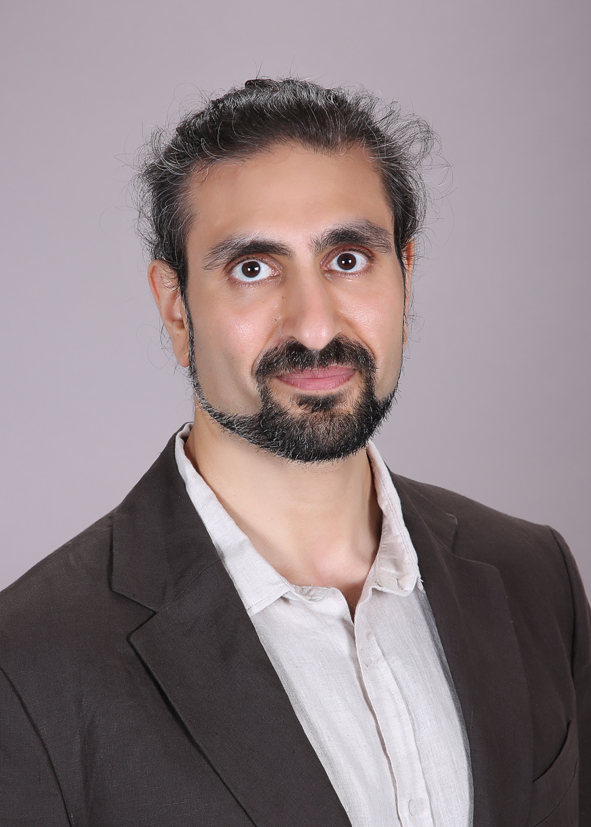
Principal Engineer - AI for Human Learning · Babbel Labs
I help research and product teams frame hard questions, build rigorous prototypes, and translate advances in neuroscience and machine learning into decisions they can act on.
Available for part-time projects under 15 hours per week
How I can help
Focused support for teams working where biological signals, machine learning and real-world constraints meet.
Clarify the scientific and technical path before expensive implementation begins.
Move from a research question or messy dataset to an evidence-generating prototype.
Make technically ambitious work legible to decision-makers, collaborators and users.
Experience
More than a decade building and advising applied AI across neurotechnology, healthcare, research infrastructure and education.
2026 - present
Babbel Labs
Building AI-assisted learning systems that combine machine learning, game theory and learning science to personalize how people develop new skills.
2020 - 2026
Charité Universitätsmedizin Berlin
Developed neuroinformatics and brain-simulation methods, including a machine-learning approach that improved classification of Alzheimer's disease, mild cognitive impairment and controls from roughly 55% to 80%. Built EEG-based Unity applications for research and neuroscience education.
2017 - 2020
McMaster University & Vector Institute
Created interpretable AI methods for clinical research across EEG, concussion and medical imaging. Designed government workshops, advised health-AI initiatives and helped interdisciplinary teams move from study design to statistical analysis.
2018 - 2020
CANARIE Research Software Team
Acted as domain expert and strategic advisor to software engineers, helping turn exploratory research code into robust, deployable research infrastructure.
2013 - 2014 + consulting
Interaxon
Designed personalized neurofeedback algorithms, signal-quality calibration and machine-learning-based artifact handling for consumer EEG hardware.
Selected work
A selection from peer-reviewed work across adaptive interfaces, neuroinformatics and clinical machine learning.
Neurotechnology
Developed progressive thresholding and co-adaptive BCI methods for training systems that respond to changes in both human learning and brain signals.
Neuroinformatics
Applied individualized pattern recognition to detect mind wandering from EEG in live lectures, connecting rigorous modelling to a noisy real-world setting.
AI in health
Contributed to work spanning deep-learning analysis of medical imaging, brain-simulation-informed dementia classification and the adoption barriers facing health AI.
Research software
Created LFSpy, a scikit-learn-compatible local feature-selection library, and FBAR, a real-time single-channel EEG artifact-detection method designed for practical neurotechnology systems.
About
My work sits at the intersection of machine learning, neuroscience and neuroengineering.
I earned a PhD in Computational Science and Engineering from McMaster University, where my research focused on user-centred, co-adaptive brain-computer interfaces. Since then, my work has crossed EEG, neurofeedback, brain simulation, medical imaging and AI in healthcare.
I currently work as Principal Engineer for AI for Human Learning at Babbel Labs, developing intelligent systems at the intersection of machine learning and how people learn.
I’m most useful when a problem is technically complex, the evidence is imperfect, and multiple disciplines need to find a shared way forward.
Have a knotty technical problem?
Send a short note about the question, the data and where you’re stuck. I’ll tell you candidly whether I can help.
kiretd@gmail.com